
Smart Motorized Roller Shades

![Smart Motorized Roller Shades 100% Blackout Safari]()
![Smart Motorized Roller Shades 100% Blackout Safari]()
![Smart Motorized Roller Shades 100% Blackout Safari]()
![Smart Motorized Roller Shades 100% Blackout Safari]()
![Smart Motorized Roller Shades 100% Blackout Safari]()
![Smart Motorized Roller Shades 100% Blackout Safari]()
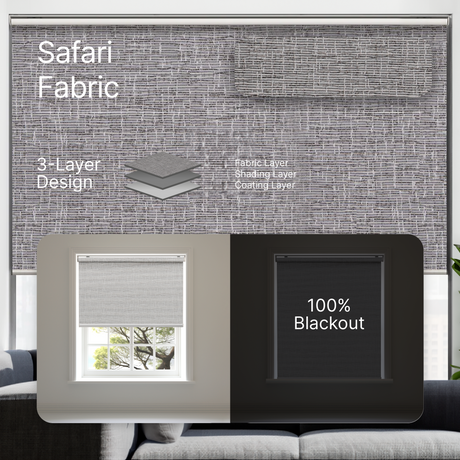
Smart Motorized Roller Shades 100% Blackout Safari
Price $119.99$239.9850% offUnit price /Unavailable-
![Smart Motorized Roller Shades 100% Blackout Essential]()
![Smart Motorized Roller Shades 100% Blackout Essential]()
![Smart Motorized Roller Shades 100% Blackout Essential]()
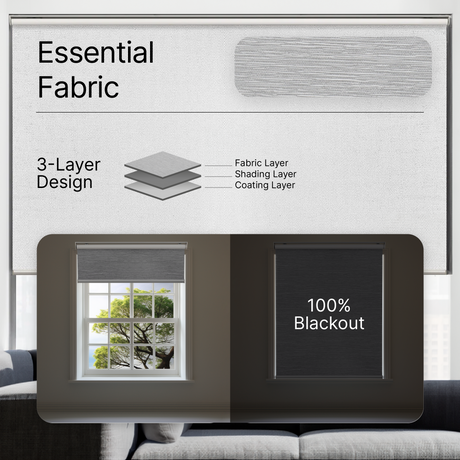
Smart Motorized Roller Shades 100% Blackout Essential
Price $109.99$219.9850% offUnit price /Unavailable -
![Smart Motorized Roller Shades 100% Blackout Linen]()
![Smart Motorized Roller Shades 100% Blackout Linen]()
![Smart Motorized Roller Shades 100% Blackout Linen]()
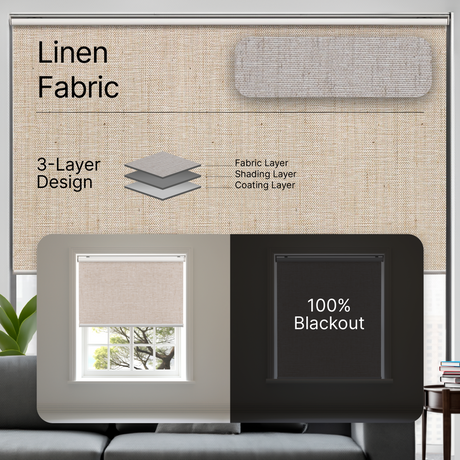
Smart Motorized Roller Shades 100% Blackout Linen
Price $119.99$199.9940% offUnit price /Unavailable -
![Smart Motorized Roller Shades 100% Blackout Sierra]()
![Smart Motorized Roller Shades 100% Blackout Sierra]()
![Smart Motorized Roller Shades 100% Blackout Sierra]()
![Smart Motorized Roller Shades 100% Blackout Sierra]()
![Smart Motorized Roller Shades 100% Blackout Sierra]()
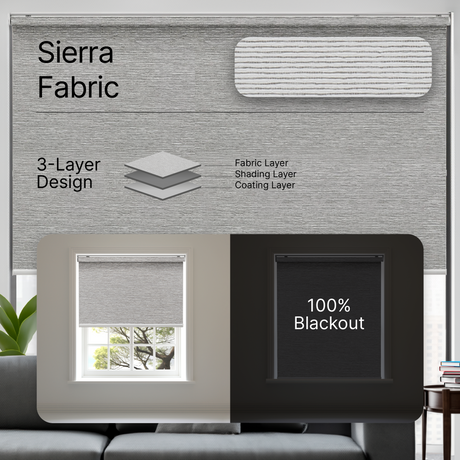
Smart Motorized Roller Shades 100% Blackout Sierra
Price $119.99$239.9850% offUnit price /Unavailable -
![Smart Motorized Roller Shades 100% Blackout Meridian]()
![Smart Motorized Roller Shades 100% Blackout Meridian]()
![Smart Motorized Roller Shades 100% Blackout Meridian]()
![Smart Motorized Roller Shades 100% Blackout Meridian]()
![Smart Motorized Roller Shades 100% Blackout Meridian]()
Smart Motorized Roller Shades 100% Blackout Meridian
Price $129.99$216.6540% offUnit price /Unavailable -
![Smart Motorized Roller Shades 100% Blackout Vinyl]()
![Smart Motorized Roller Shades 100% Blackout Vinyl]()
![Smart Motorized Roller Shades 100% Blackout Vinyl]()
![Smart Motorized Roller Shades 100% Blackout Vinyl]()
Smart Motorized Roller Shades 100% Blackout Vinyl
Price $109.99$183.3240% offUnit price /Unavailable -
![Smart Motorized Light Filtering Roller Shades 50% Blackout Sierra Translucent]()
![Smart Motorized Light Filtering Roller Shades 50% Blackout Sierra Translucent]()
![Smart Motorized Light Filtering Roller Shades 50% Blackout Sierra Translucent]()
![Smart Motorized Light Filtering Roller Shades 50% Blackout Sierra Translucent]()
Smart Motorized Light Filtering Roller Shades 50% Blackout Sierra Translucent
Price $129.99$259.9850% offUnit price /Unavailable -
![Smart Motorized Light Filtering Roller Shades 70% Blackout Linen Translucent]()
![Smart Motorized Light Filtering Roller Shades 70% Blackout Linen Translucent]()
![Smart Motorized Light Filtering Roller Shades 70% Blackout Linen Translucent]()
Smart Motorized Light Filtering Roller Shades 70% Blackout Linen Translucent
Price $119.99$239.9850% offUnit price /Unavailable -
![Smart Motorized Light Filtering Sheer Roller Shades Translucent Vision]()
![Smart Motorized Light Filtering Sheer Roller Shades Translucent Vision]()
![Smart Motorized Light Filtering Sheer Roller Shades Translucent Vision]()
![Smart Motorized Light Filtering Sheer Roller Shades Translucent Vision]()
Smart Motorized Light Filtering Sheer Roller Shades Translucent Vision
Price $129.99$216.6540% offUnit price /Unavailable


















Show collection description
You pull up the app, tap once, and every roller shade in the living room glides down at the same time. No getting up. No yanking a chain. No uneven hems across three windows.
That is what smart motorized roller shades actually feel like day to day and once you have lived with them for a week, the old pull-cord routine feels like dialling a rotary phone.
At Beasen, our smart motorized roller shades combine a clean, flat-panel design with built-in motors you control by voice, app, remote, or schedule. They connect directly to Alexa, Google Home, Apple HomeKit, and Samsung SmartThings - no workarounds, no extra hubs cluttering your shelf.
Whether you need a pitch-dark bedroom at noon, filtered daylight in a home office, or a soft glow in the kitchen while you cook, there is a fabric and opacity level in this collection that fits.
Why Roller Shades Are the Most Popular Style for Motorization
Not every shade type works equally well with a motor inside it. Roman shades have folds that can bunch unevenly. Cellular shades weigh more because of their honeycomb layers. Woven wood textures add friction to the roller tube.
Roller shades, on the other hand, are a single flat panel of fabric wrapped around a tube - the simplest possible design for a motor to roll up and down. That simplicity translates into a few real advantages:
- Quieter operation. Less fabric weight and no accordion folds mean the motor has less resistance. You will hear a soft hum, not a grinding noise.
- Faster response. A lightweight panel moves quicker from fully open to fully closed, which matters when you are on a video call and the sun shifts.
- Slimmer profile. When rolled up, the shade tucks into a compact tube at the top of your window. No bulky stack blocking your view or eating into your window frame.
- Lower starting price. Fewer materials and a straightforward build keep roller shades at a lower price point than motorized Roman or cellular options - without cutting corners on fabric quality or motor performance.
If you are exploring other motorized styles too, ourtypes of motorized shades guide walks through every option side by side. But if you want the cleanest look, the quietest motor, and the smoothest daily experience, rollers are where most people start and usually where they stay.
What Makes These Shades "Smart"
The word "smart" gets thrown around a lot, so here is what it actually means for your Beasen roller shades.
- Voice control. Say "Alexa, close the bedroom shades" or "Hey Google, open the living room" and the shades move. No remote to find, no app to unlock.
- App control from anywhere. Stuck at the office and forgot to close the shades before an afternoon heatwave? Open the app on your phone and close them from wherever you are.
- Schedules and scenes. Set your shades to open at 7 AM on weekdays and 9 AM on weekends. Create a "Movie Night" scene that dims the living room and closes every shade in the house with a single tap.
- Group control. Have four windows in one room? Group them so they move together - same speed, same stopping point, every time. No more one shade halfway up while the other three are down.
- Matter over Thread - the protocol that actually matters. Most smart shades connect through Wi-Fi or Zigbee and need a separate hub or bridge to talk to your smart home. Beasen shades useMatter over Thread, which connects directly to Apple Home, Google Home, Alexa, and SmartThings without an extra hub. It runs locally on your network, so your shades respond even if your internet goes down - something Wi-Fi-based shades cannot promise.
For a deeper look at which voice assistants and ecosystems work with our shades, check out oursmart home compatibility guide.
Choose Your Fabric: Blackout, Light Filtering, or Sheer
Every roller shade in this collection falls into one of three opacity categories. The right one depends on what the room needs - not just how it looks.
100% Blackout Blocks all outside light. The room goes dark even at noon.
Best for bedrooms, nurseries, home theaters, and anywhere sleep quality or screen glare is non-negotiable. If you work night shifts and sleep during the day, blackout is the only option that actually delivers.
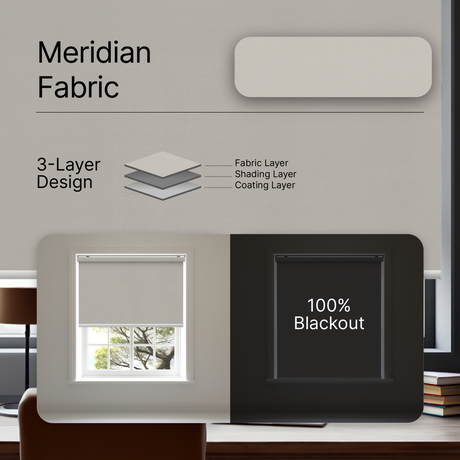
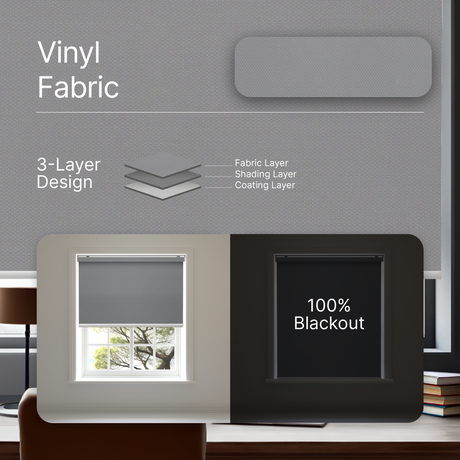
Our blackout roller shades come in six fabric families -Safari,Essential,Linen,Sierra,Meridian, andVinyl - each with multiple colours so you are not stuck with plain white.
Light Filtering (50%–70% Blackout) Softens and diffuses sunlight without making the room dark. You still get natural light, but without the harsh glare on screens or furniture.
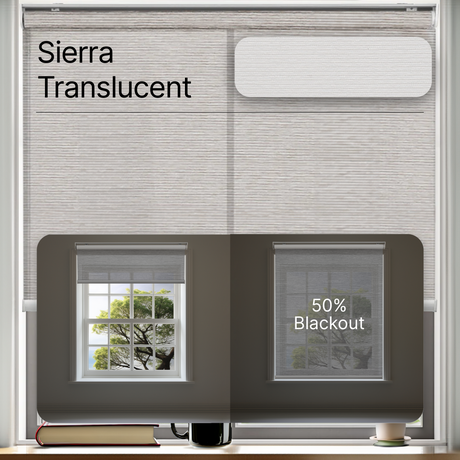
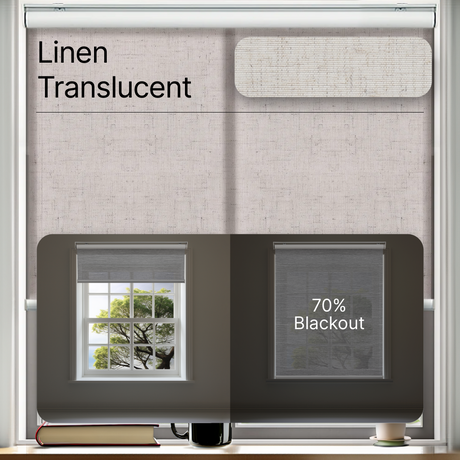
Best for living rooms, kitchens, dining areas, and home offices where you want brightness without squinting. OurSierra Translucent (50%) andLinen Translucent (70%) options hit that balance.
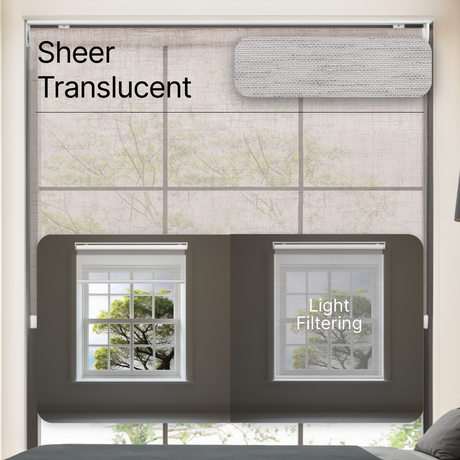
Sheer / Translucent Lets in the most light while still cutting UV rays and providing daytime privacy. People outside see a soft glow instead of a clear view in.
Best for sunrooms, living rooms with a view, and spaces where natural light is the whole point. OurTranslucent Vision sheer roller shade does this without making the window look "covered."
Not sure which opacity is right for your room? Ourlight filtering vs. blackout guide breaks down the differences in detail.
How They Are Powered
You do not need an electrician for most setups. Here is a quick snapshot of your power options:
- Rechargeable battery - The most common choice. The motor runs on a built-in lithium battery that lasts roughly 6 to 9 months on a single charge, depending on how often you open and close the shades. When it is time, you plug in a USB cable, charge it up, and you are good for another several months. No wiring, no outlet needed near the window.
- Hardwired - Best for new construction or major renovations where you can run low-voltage wiring behind the wall before drywall goes up. Once installed, you never think about power again. No batteries, no charging cables.
- Solar panel - Clips onto the window frame and keeps the battery topped up using daylight. Ideal for hard-to-reach windows where climbing a ladder to charge every few months is not practical - think second-storey stairwell windows or skylights.
We go into the full comparison - including real-world battery life and when each option makes sense - in ourbattery vs. wired vs. solar guide.
Where Smart Motorized Roller Shades Work Best
You can put them in any room, but some rooms benefit more than others. Here is where motorization earns its keep:
- Bedroom Schedule blackout shades to close at your bedtime and open gradually in the morning. It is a quieter, more natural alarm than any phone buzzer. If you have a nursery, the cordless design removes dangling cords entirely - one less safety worry. We cover fabric picks, light-blocking tips, and setup ideas in our bedroom shades guide, so you can match the shade to your sleep routine without guessing.
- Home Office Afternoon glare on your monitor is a daily headache in west-facing offices. A light filtering roller shade knocks out the glare without making the room feel like a cave. Set it on a schedule so it closes automatically when the sun hits your desk. For more on cutting screen glare while keeping the room bright, our home office window treatment guide goes deeper into layout and fabric choices.
- Living Room This is where group control really shines. If your living room has three or four windows, you can group them and move them all at once - same height, same speed, clean uniform look across the wall. Privacy matters here too, especially at street level. Our privacy shades guide explains which fabrics block the view from outside during the day and at night, so you are not trading light for coverage.
- Kitchen Light filtering fabric keeps the room bright for cooking while blocking UV that fades countertops and cabinetry over time. And because the shade is motorized, you are not reaching over a hot stove to adjust it with greasy hands. A Sierra Translucent (50% blackout) works well in most kitchen setups - enough filtering to soften the light, but not so dark that you need to flip the light switch at two in the afternoon.
- Large Windows and Patio Doors This is where motorization is not just convenient - it is almost necessary. Manually pulling a 90-inch-wide shade up and down multiple times a day gets old fast. A motor handles wide, heavy shades smoothly every time. If you are covering a sliding door or a full glass wall, our patio door shades guide covers sizing, mounting, and how to avoid common fit issues on doors you walk through every day.
- Home Theater / Media Room A 100% blackout roller shade plus a "Movie Night" scene on your app means total darkness in one tap, no fumbling with cords in the dark. We break down the full setup - including how to handle side light leaks and which mount style works best - in our home theater window treatment guide.
- Bathroom Moisture-friendly fabrics hold up in humid environments. The cordless motor means no dangling chains near water, and you get privacy without permanently blocking the window.
Our Vinyl blackout fabric is a solid pick for bathrooms - it handles humidity well, wipes clean easily, and gives you full blackout when you want it.
What to Think About Before You Order
A few things are worth sorting out before you add to cart:
- Measure your windows accurately. Motorized roller shades are custom-cut to your measurements. A quarter-inch off and the shade either will not fit or will leave light gaps on the sides. Our window measuring guide walks you through it step by step - including the difference between inside and outside mount.
- Decide on inside mount or outside mount. Inside mount sits inside the window frame for a flush, built-in look. Outside mount covers the entire frame and blocks more light at the edges - better for blackout purposes. If your window frame is shallow (less than 2 inches deep), outside mount is usually the safer bet.
- Order fabric samples first. Colours look different on a screen than they do on your wall. We offer swatch samples so you can hold the actual fabric up to your window and see how it looks with your room's lighting before committing.
- Pick your smart home ecosystem. If you are already using Apple HomeKit, Alexa, or Google Home, Beasen shades work with all of them through Matter over Thread. No extra bridge to buy. If you are on a system like Home Assistant or Hubitat, those are supported too.
- Think about how many windows you are covering. Doing one window? A single remote works fine. Doing a whole room or a whole house? The app and voice control make managing multiple shades far easier than juggling separate remotes for each window. You can also add a Beasen Smart Link Hub if you want to control everything from one dashboard.
Why Beasen for Your Motorized Roller Shades
There are a lot of motorized shade brands out there. Here is what sets Beasen apart:
- Matter over Thread built in. Your shades talk directly to Apple Home, Google Home, Alexa, and SmartThings - no proprietary hub required. And because it runs locally, there is no cloud lag. The shade moves the instant you give the command.
- Limited Lifetime Warranty. We stand behind the motor, the fabric, and the build. Not a one-year warranty with fine print - a limited lifetime warranty that actually covers what matters.
- Perfect Fit Guarantee. If the shade does not fit your window and you followed our measuring guide, we make it right. No arguments, no runaround.
- Best Price Guarantee. Find the same product cheaper somewhere else? We will match it.
- Free worldwide shipping. No minimum order, no shipping surprises at checkout.
- 15-minute DIY installation. Mount the brackets, snap the shade in, pair it with your app. That is it. Our installation guide covers the whole process, and our video center shows it in real time.
Frequently Asked Questions
1. How quiet are smart motorized roller shades?
Very quiet. The motor produces a soft hum - roughly the volume of a quiet conversation across the room. You will not hear it over a TV, a podcast, or normal background noise. The lightweight roller design helps here too, since the motor is not straining against heavy fabric folds.
2. Will the shades still work if my internet goes down?
Yes. Because Beasen shades use Matter over Thread, your shades communicate locally with your smart home hub - not through a cloud server. Even if your Wi-Fi or internet drops, the shades still respond to voice commands, app controls on your local network, and any schedules already set. The included remote always works regardless of network status.
3. Can I operate them manually if the battery dies?
Motorized roller shades are designed to be motor-driven, and forcing them manually can damage the internal gears. The good news is that the battery lasts 6 to 9 months on a single charge, and the app sends a low-battery alert well before it runs out. If you want zero battery maintenance, consider adding asolar panel that keeps the battery charged using daylight.
4. How many shades can I control at once?
There is no practical limit through the app. You can create room groups (all living room shades), floor groups (all upstairs shades), or whole-home scenes (close everything at sunset). With the included remote, you can control multiple shades assigned to the same channel.
5. How long does installation take?
About 10 to 15 minutes per window. You need a drill, a level, a tape measure, and a pencil. Mount two brackets, snap the shade in, and pair it with your phone. No electrician, no special tools.
6. Can I try the fabric before ordering?
Absolutely. We sell fabric swatch samples so you can feel the texture, check the colour against your walls, and see how much light the fabric lets through - all before placing a full order.
7. Are they safe for homes with kids and pets?
Yes. There are no hanging cords, chains, or pull strings anywhere on the shade. The U.S. Consumer Product Safety Commission identifies corded window coverings as one of the top hidden hazards in homes with young children. Motorized roller shades eliminate that risk entirely.
8. Do they help with energy efficiency?
They do. Closing your shades during peak sun hours reduces heat gain, which means your air conditioner does not have to work as hard. In winter, closed shades add an extra layer of insulation against cold drafts. The U.S. Department of Energy estimates that well-fitted window coverings can reduce heat gain by up to 77% and heat loss by up to 40%, depending on the type.


